The running cost of a Passive House depends on its heating demand, equipment, energy tariff and household use. Heating, hot water, cooling, ventilation and appliances all belong in the budget.
Why Passive House
The practical benefit starts with reducing heat loss through insulation, airtight construction and heat-recovery ventilation.
Passivhaus building certification combines a checked PHPP energy calculation with construction evidence, an airtightness test and ventilation commissioning records. The Passive House Institute describes this process.
Energy prices in Romania have been volatile.
The model: Serenity 95
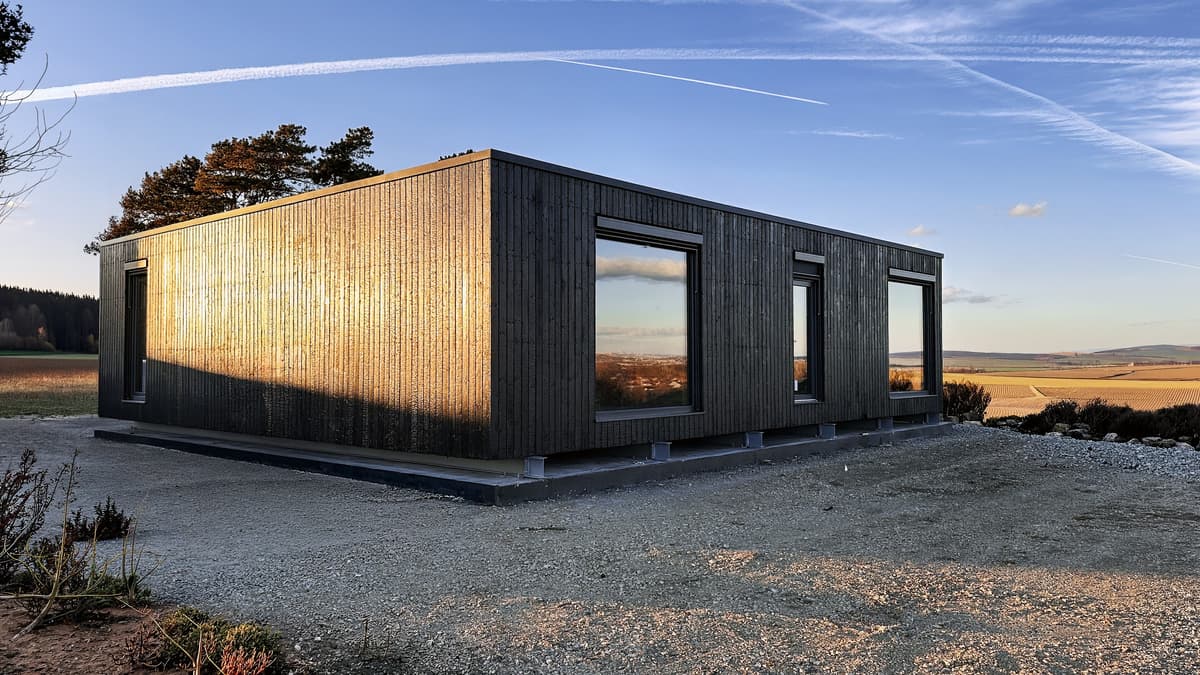
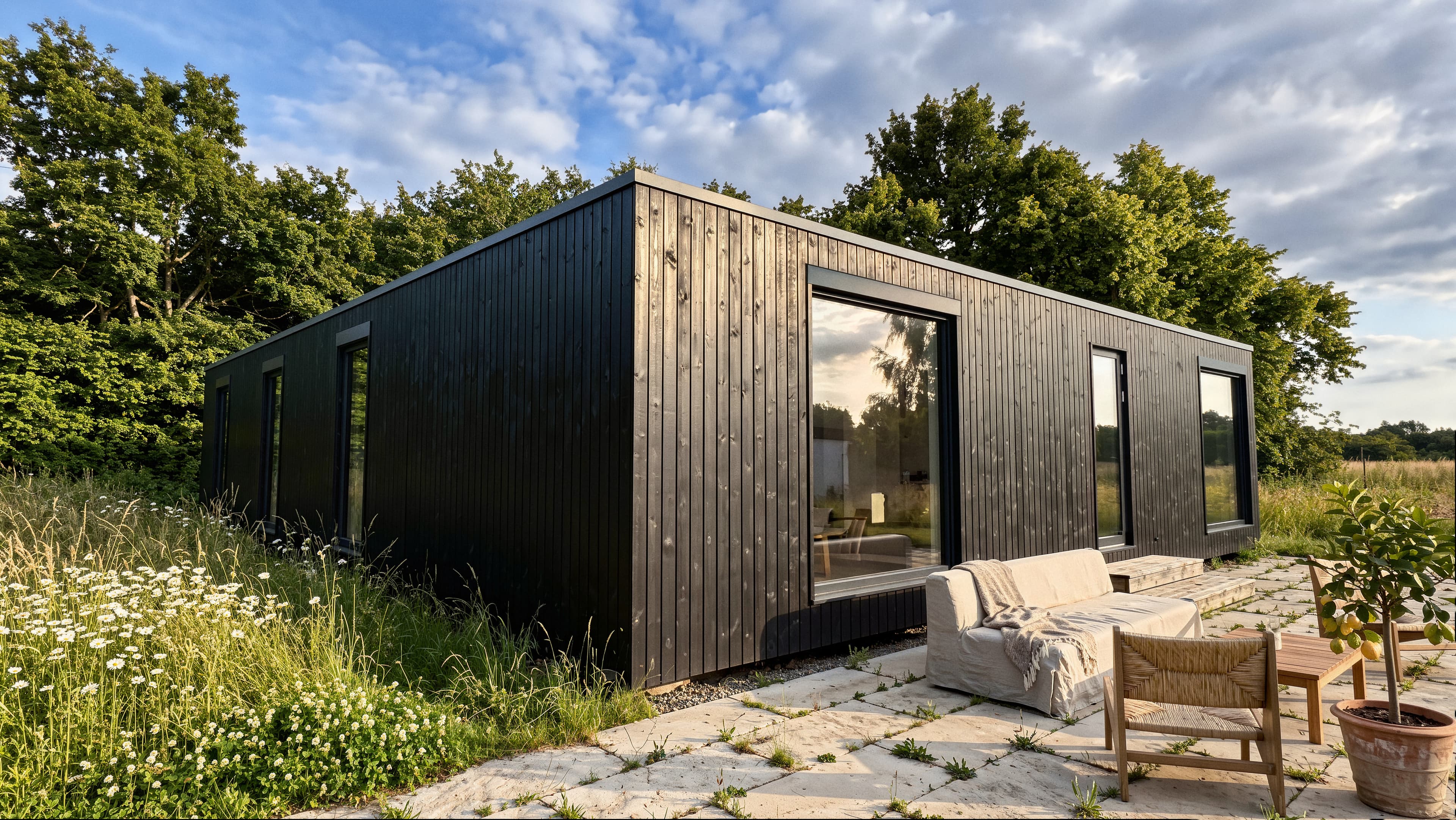
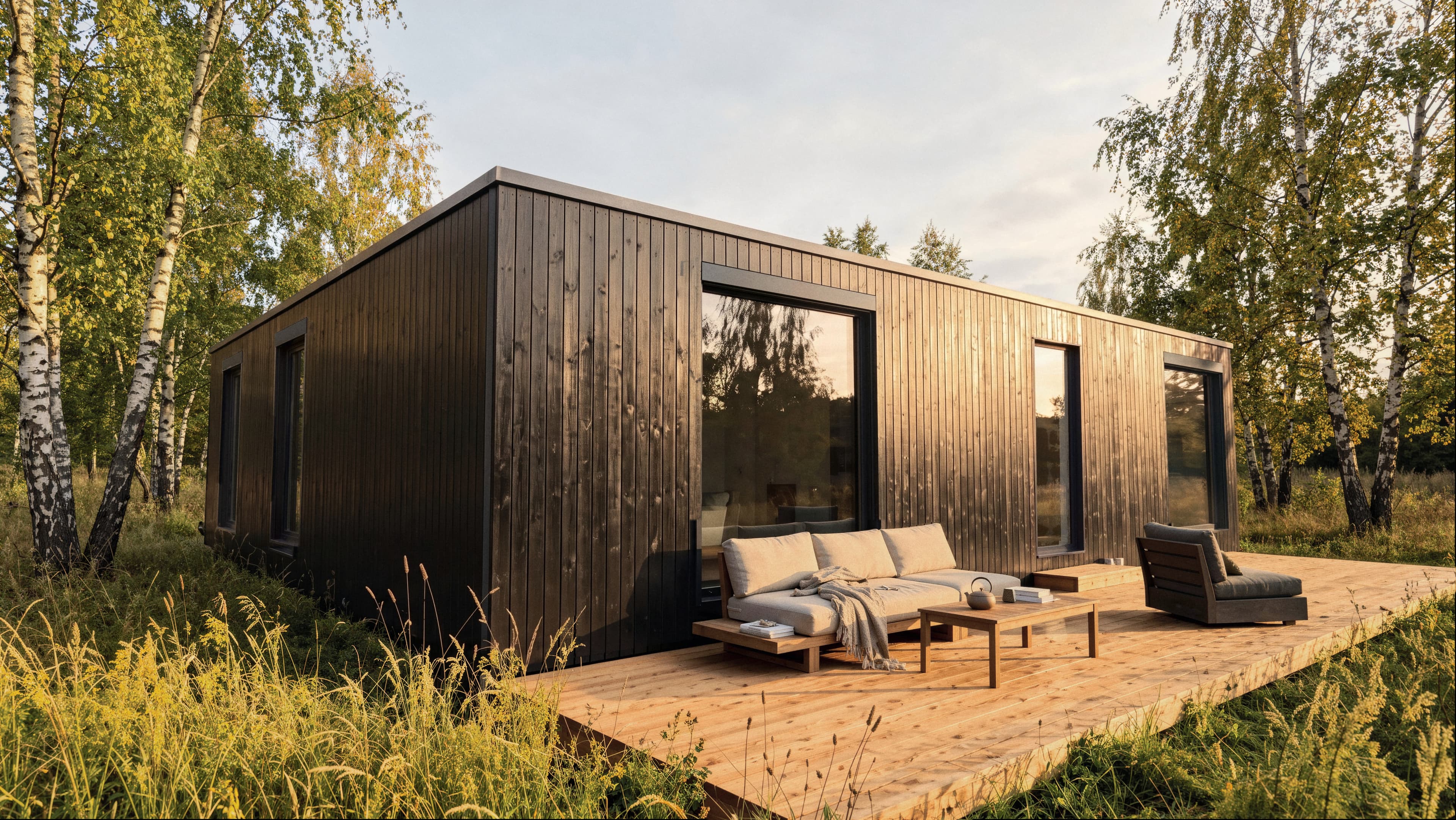
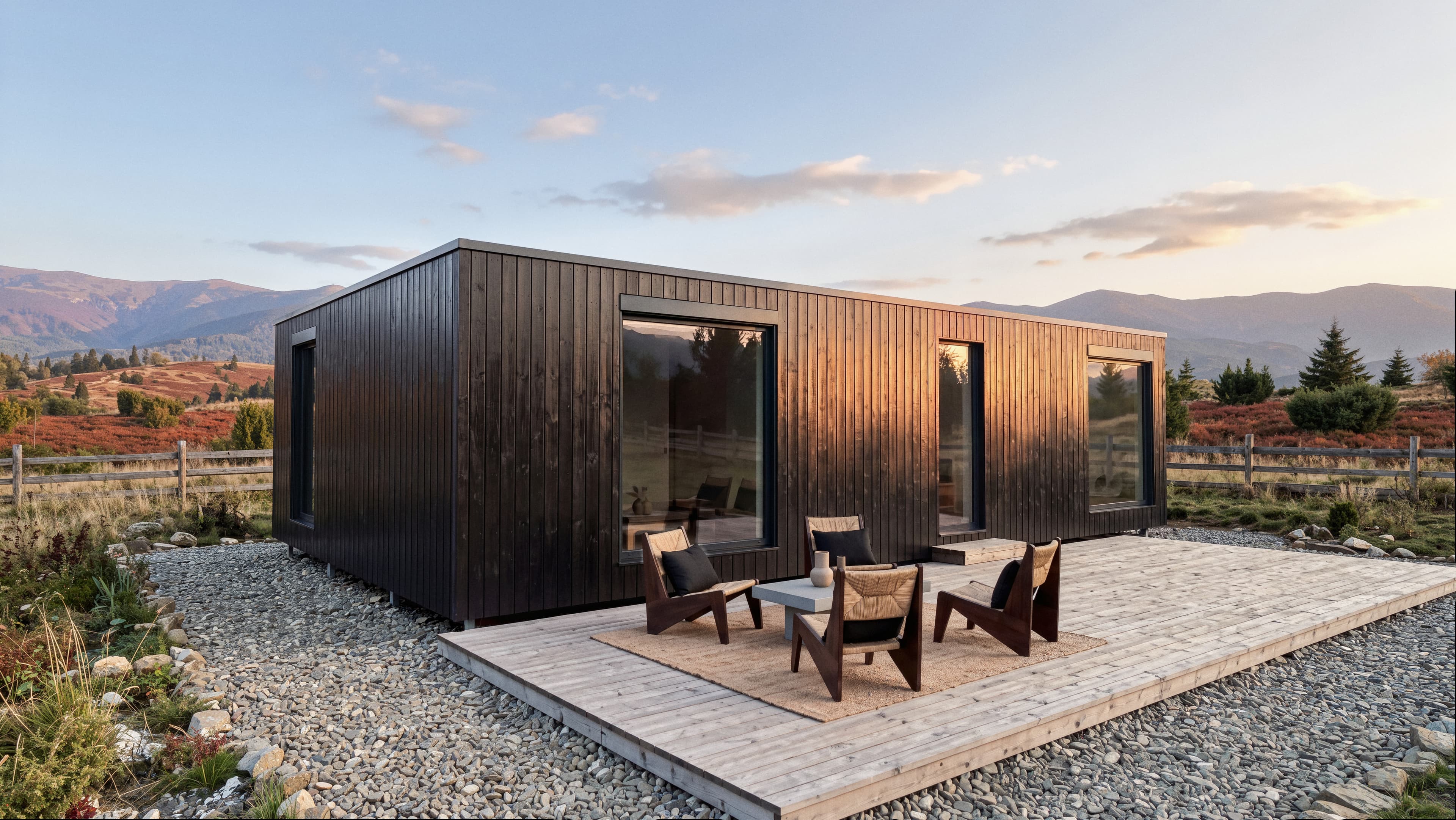
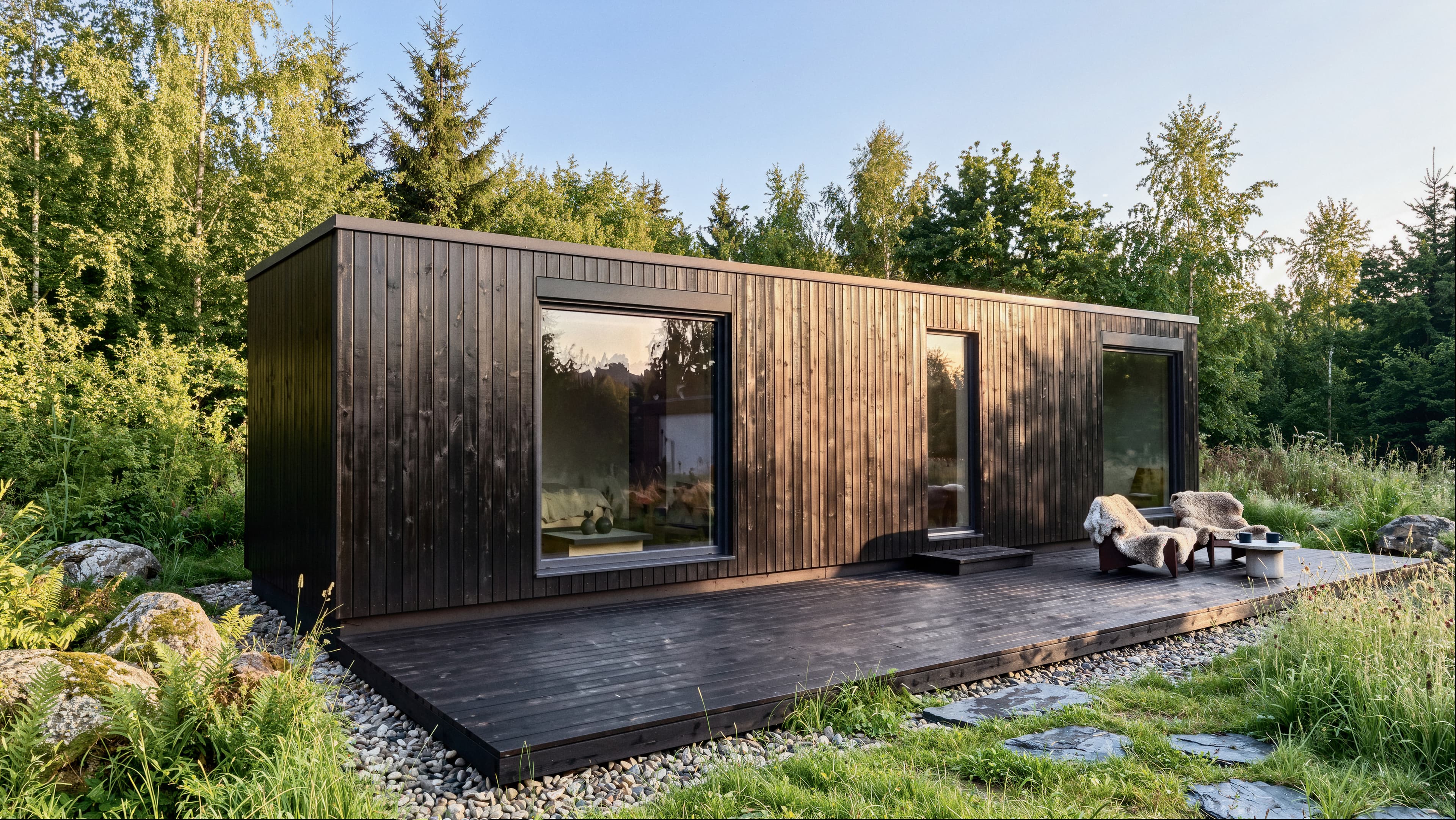
BioBuilds Serenity 95 has up to three bedrooms and a nominal exterior area of 95 m². Usable interior area is 77.06–78.21 m², depending on the layout. BioBuilds quotes about three weeks of factory production for a standard model under standard conditions, counted from factory scheduling. Permits, site preparation, transport and assembly follow the project's agreed schedule.
BioBuilds uses a Passivhaus-certified building system. Passivhaus Classic requires heating demand ≤15 kWh/m²/year or heating load ≤10 W/m², airtightness n50 ≤0.6 h⁻¹, and renewable primary energy demand ≤60 kWh/m²/year. Energy calculations use PHPP treated floor area; system certification does not certify each completed home. Passivhaus criteria.
The current BioBuilds Serenity 95 Turnkey specification includes Zehnder ComfoAir Q450 with ComfoClime Q and a Samsung WindFree or Panasonic heat pump. Zehnder states heat recovery of up to 96% for ComfoAir Q, depending on operating conditions. BioBuilds specifies triple glazing with Ug = 0.50 W/(m²K) and 300 mm of STEICO wood-fibre insulation. Zehnder ComfoAir Q.
Where the energy actually goes
This is where Passive House data gets interesting. iBRoad's 2018 factsheet attributed around 55% of Romanian apartment energy use, and up to 80% in individual houses, to heating.
| Category | What determines its energy use |
|---|---|
| Space heating | Heat demand and seasonal system efficiency |
| Hot water | Water use, storage losses and heating efficiency |
| Appliances & lighting | Equipment power and operating time |
| Ventilation | Fan power and operating time |
| Cooling | Climate, shading, internal heat gains and system efficiency |
For a heat pump, estimate heating electricity by dividing the heat supplied by the seasonal performance factor.
As space-heating demand falls, hot water and appliances can account for a larger share of the energy bill. Their exact shares depend on the household and its equipment.
A sourced cost benchmark: at 15 kWh/m² of annual heating demand, direct electric resistance heating would cost about €4.34 per m² of treated floor area per year, using Eurostat's second-half 2025 EU household average of €0.2896/kWh including taxes. Calculation: 15 × 0.2896 = 4.344. This is an illustration, not a BioBuilds bill. A heat pump's electricity use depends on its seasonal performance; other energy uses are additional.
Low heating demand reduces the energy needed for comfort. Your bill still depends on weather, indoor temperature, household use and energy prices.
Year-by-year costs: what to compare
Romania's electricity price-cap scheme ended on 01.07.2025, as ANRE confirmed. Eurostat reports that household electricity prices in national currency were 58.6% higher in the second half of 2025 than in the second half of 2024. This is a national comparison, not an overnight increase on an individual bill. Eurostat.
For each year, record metered electricity and any other fuels, the actual tariffs, fixed charges and billing dates. Separate space heating from other uses where submetering is available.
Weather belongs in that comparison. Romania's meteorological service identifies winter 2023–2024 as its warmest in the 1900–2024 record. Compare energy use alongside weather and indoor temperatures. ANM. ANM also reported extreme heat in July 2025.
Compared to conventional homes
The same 2018 factsheet reported 308 kWh/m² for Romania's residential stock. That historical average is not a comparable new home's measured consumption.
Passive House Institute monitoring reports heating-energy savings of about 90% against the older building standard and about 80% against the new-build requirements used in those studies. These are heating-energy comparisons, not promised BioBuilds bill savings.
For a comparison involving gas and electricity, calculate each fuel separately using its tariff and the heating system's seasonal efficiency.
A lower heating demand reduces the amount of energy exposed to price changes. The monetary saving depends on both homes' tariffs, systems and use.
Romania's gas rules in 2026: OUG 12/2026, as amended, provides household gas-price protection for 01.04.2026–31.03.2027. Cost comparisons should use the applicable contract and regulated calculation, rather than assume an unrestricted market price.
What living in it actually feels like
Numbers are useful, but they don't capture what it's actually like to live in a Passive House.
Temperature consistency
Insulation and airtight construction support stable indoor temperatures. Summer comfort depends on shading, ventilation, internal heat gains and climate; some projects need active cooling. Passive House summer guidance.
Air quality
Heat-recovery ventilation supplies filtered outdoor air and extracts stale indoor air. Zehnder offers pollen filters for ComfoAir Q; their performance depends on the selected filter and maintenance.
Silence
BioBuilds uses triple glazing and insulated walls. Acoustic performance depends on the configuration, installation and site; the values confirmed in the offer apply.
The long-term benefit is lower heating demand. Actual savings depend on the building, maintenance, occupants and energy prices. A Politehnica University of Timișoara research project also documents a monitored home designed using Passive House principles in Romania.